The capitol is another key building that had to be completely reconstructed. It was originally built starting in 1701, but the first version burned in 1747. Although the General Assembly considered moving the seat of government farther west to be closer to populations centers, they decided to keep it in Williamsburg and rebuild. Although some of the original walls were retained, the 1751 capitol had many modifications. The seat of government was eventually moved to Richmond in 1779. Thereafter one wing was demolished and the other put to other uses until it burned in 1832. The remaining materials were repurposed, and in 1850 a school building was constructed on the site. It was, in turn, demolished after the Civil War. Each of these iterations may be seen at the link above.
The Association for the Preservation of Virginia Antiquities received the property in 1897 and then conveyed it to Colonial Williamsburg. Although the second iteration of the building was the one that was the center of debate and activity immediately prior to and during the Revolution, the reconstruction team chose to follow the better-documented design of the original building. It had two sections connected by a piazza to reinforce the bicameral format of the legislature.
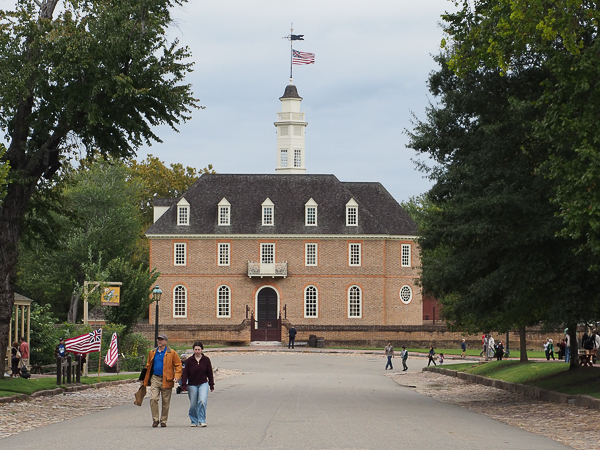
The main entrance to the capitol is in the east wing facing Duck of Gloucester Street.
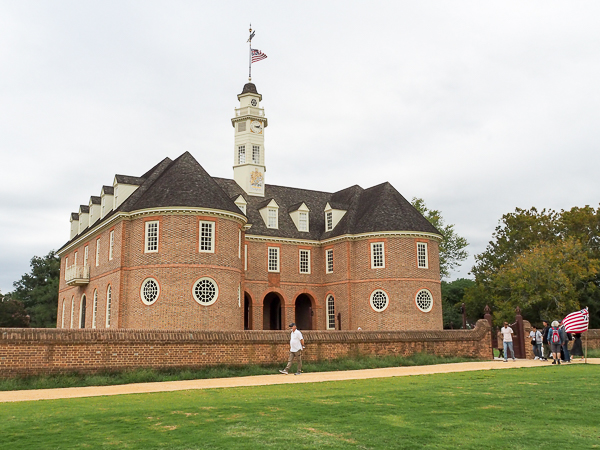
The apsidal features on either side of the central piazza are among the earliest use of such construction in American architecture. The 1751 building had square ends and a columned portico instead of the arched piazza.
The west wing, on the left in this image, housed the courtroom on the ground floor and the council chambers above. The Governor's Council was appointed by the sovereign and functioned as the upper house of the legislature.
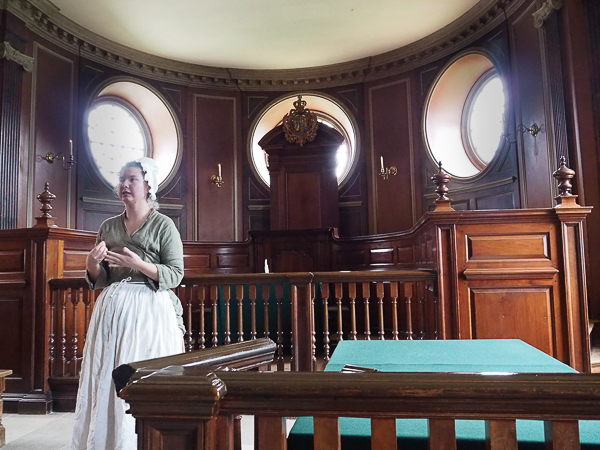
The General Court had jurisdiction over all kinds of criminal, civil, and even religious disputes. The judges were members of the Council and were not legal scholars.
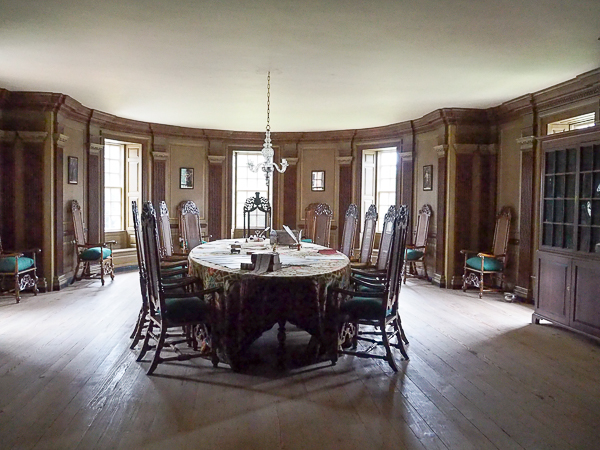
The Council chamber is located directly above the courtroom.
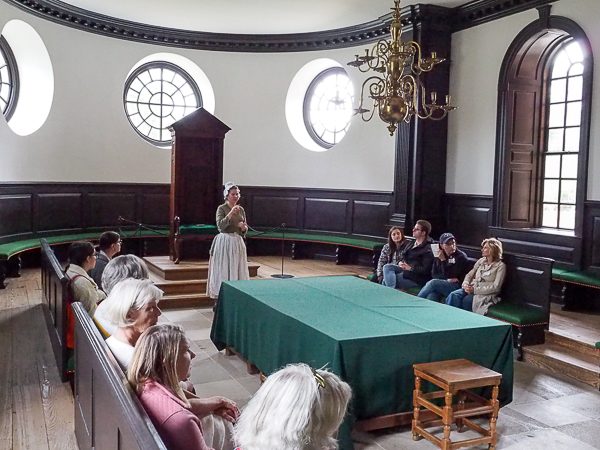
The lower branch of the legislature, the House of Burgesses, was located in the east wing.
The proximate cause of the split between Great Britain and the American colonies was the Stamp Act, but the key question was whether the colonies could be self-governing or if they came under the jurisdiction of the British Parliament, where they had no representation.
The colonists' view was that they had been essentially self-governing for over 150 years and that Parliament had no knowledge of conditions across the sea. There was additional complexity, of course.
Was it possible that relations could have been patched up and the revolution prevented? Who knows?
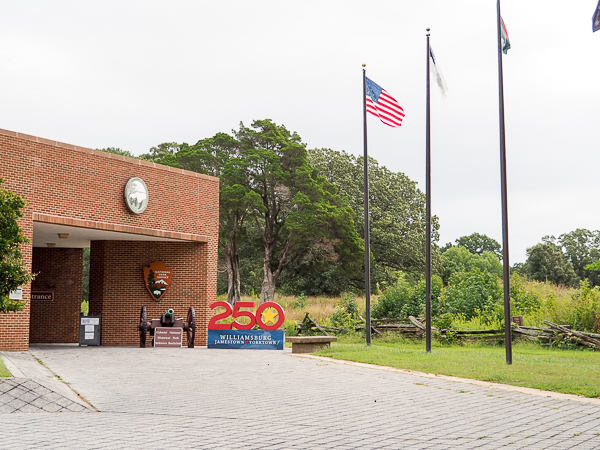
Although Marybeth left before the crack of dawn our last day, so the three of us didn't get to Yorktown, Barbara and I visited the Yorktown museum. She stayed to drive around the battlefield, but I had a date with friends Bill & Klaire who live in Yorktown.
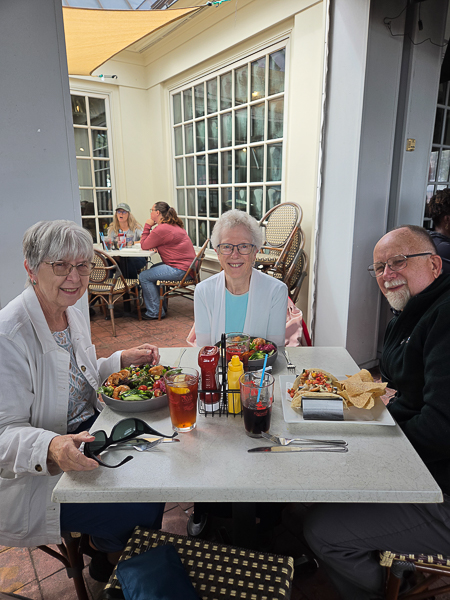
I met Bill & Klaire at their church, Yorkminster Presbyterian, and we then went to have lunch on the York riverfront. The waiter at the Water Street Grille obliged us by taking our picture. It was good to see old friends again.
After lunch I headed home without incident.
It was a fun weekend!
Click your "back" button to return to the previous page or click for our picture album.