Much has changed at Jamestown since Jim and I visited in 1996. Jamestown Rediscovery had only been formed two years earlier with the goal of finding the original fortified settlement. The announcement of its location was made shortly after we visited. The Archaerium hadn't been built and the artifacts were displayed in a crude building. At that time we mostly explored the "New Towne" on the National Park side. The fact that I have almost no pictures from that visit shows that there wasn't much to see.
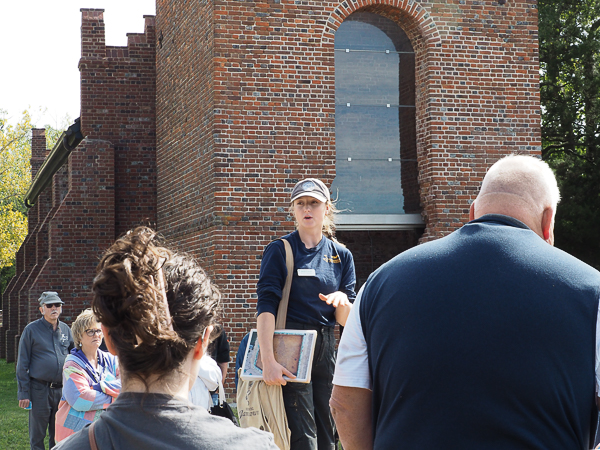
I particularly wanted to take the archeological tour, which was excellent. Our guide, Katie, was one of the practicing archeologists on the site and knew her stuff.
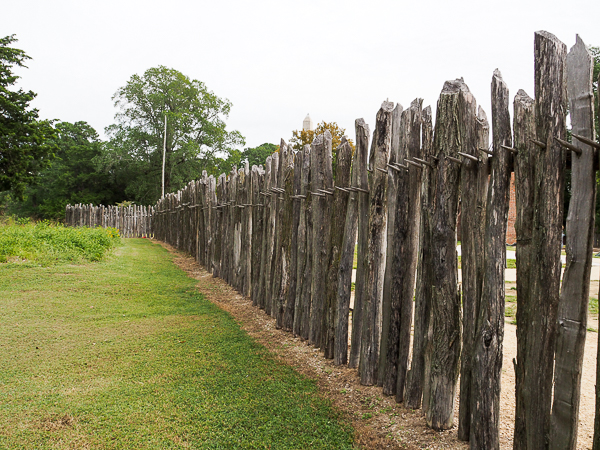
Within weeks after arrival at Jamestown, the colonists constructed a triangular palisaded fort for protection against the resident native people who were alarmed by this "invasion." For many years it was assumed that the site of the fort had been eroded by the river, but in the late 20th century most of it was rediscovered. Only one corner of the original fort had been lost.
A seawall protects the remaining land from erosion, although flooding is still common, and present for our visit.
These reconstructed palisades show the original layout of the fort as determined by excavations.
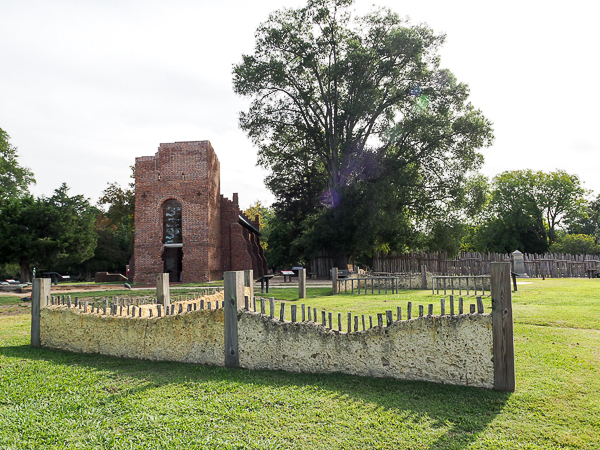
The foundations of the 1608 post-in-ground (or "mud and stud") church are nearly in the center of the fortification. The low wall is a reconstruction to show its location, configuration, and construction type.
This is the first church constructed in the colony. Before it was built, worship was held under a sail suspended from trees. Pocahontas and John Rolfe were married in the 1608 church.
Four graves are present in the Chancel area, farthest away from where I'm standing. They are identified with Rev. Robert Hunt, Captain Gabriel Archer, Sir Ferdinando Wainman, and Captain William West.
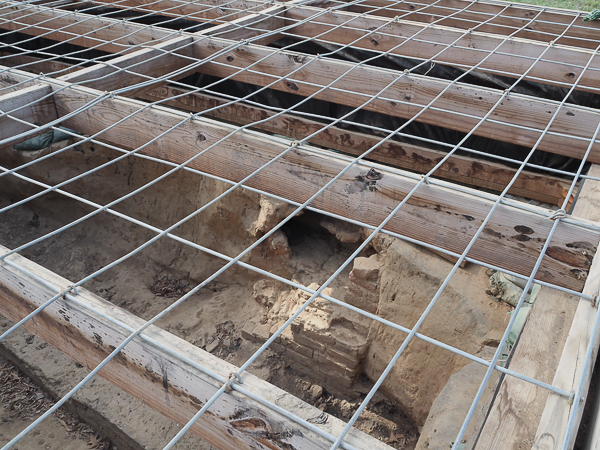
In 2012 archeologists excavated the cellar kitchen uncovered here. During the 1609/1610 starving time, the kitchen was converted to a trash dump. Amid animal bones and other artifacts they found the bones of a young girl that showed evidence of butchery. Rumors of cannibalism had persisted for centuries, and this confirmed the rumors.
The girl has been named "Jane" as in Jane Doe. Her actual name will probably never be known.
The excavation is covered every night, which is why the grid remains to support the tarp.
Mortality at Jamestown was very high, except under John Smith's leadership, sometimes exceeding 80%. Many contemporary writers attributed the high death rate to laziness, but it was possibly due to nutritional deficiencies. An exhaustive discussion of possible causes may be found at the link.
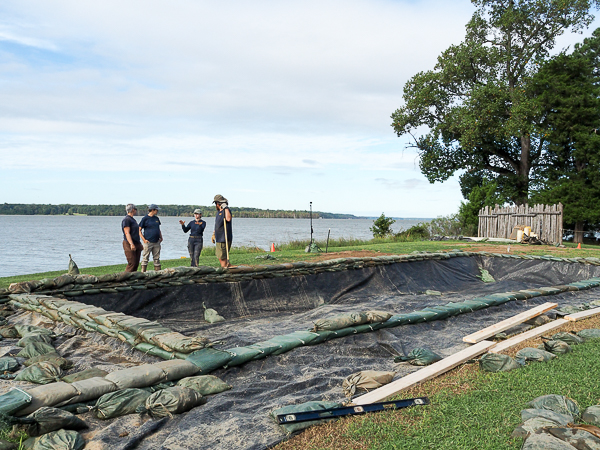
A team of archeologists was hard at work preparing an excavation. This is a large cemetery inside the palisade walls, and four graves will be studied in detail. At present, the team is constructing a temporary shelter that will both protect the excavation from the elements and shield the sensitive work from prying eyes.
Historians speculate that the dead were buried inside the fortification to keep the natives from realizing how many of the colonists had died. Had they known how weak the colonists really were, perhaps they would have made more concerted attacks.
To see how this plays out, check this discussion of the October, 2025, excavations. On the archeological tour, the guide said that the intent is for all excavated bones to be interred in a purpose-built mausoleum, but those plans are in the future.
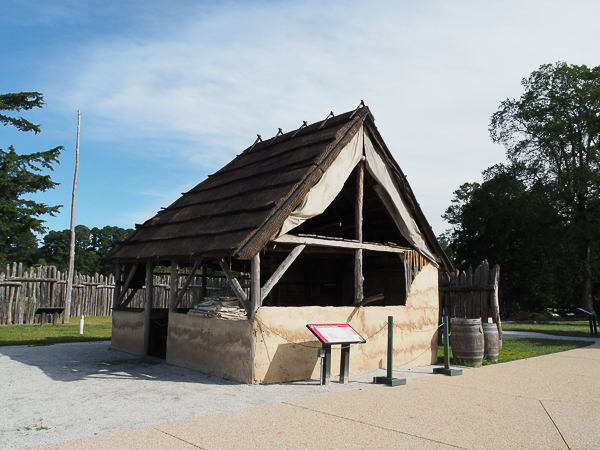
This reconstructed building was originally a blacksnith's shop later turned into a bakery. Like the original church, it was of "mud and stud" construction.
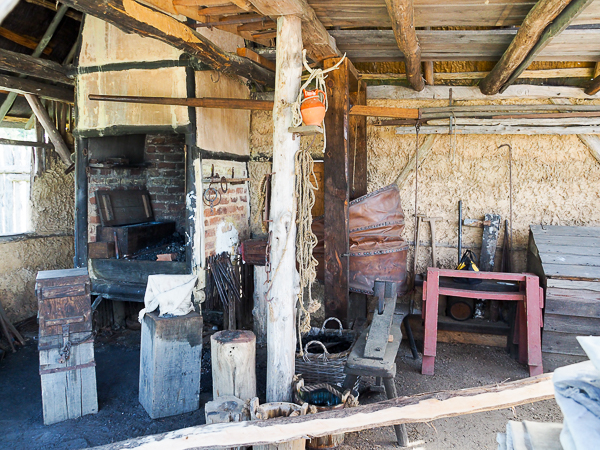
The interior of the structure shows the forge on the left, with the large leather bellows in the center.
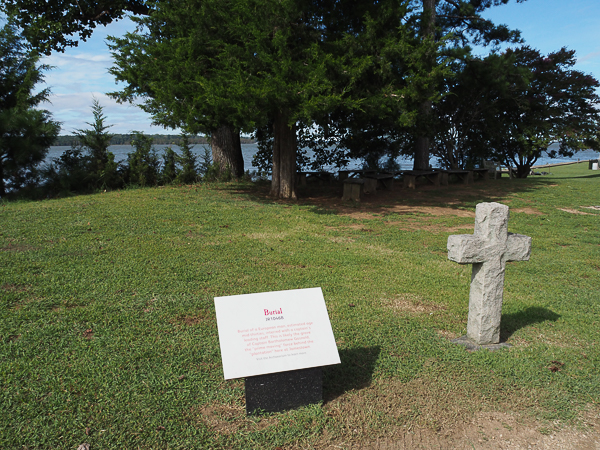
This grave found outside the fortifications is probably that of Captain Bartholomew Gosnold, the "driving force" behind the expedition to Jamestown. He died very shortly after arriving in the area, so his contributions have not received much attention.
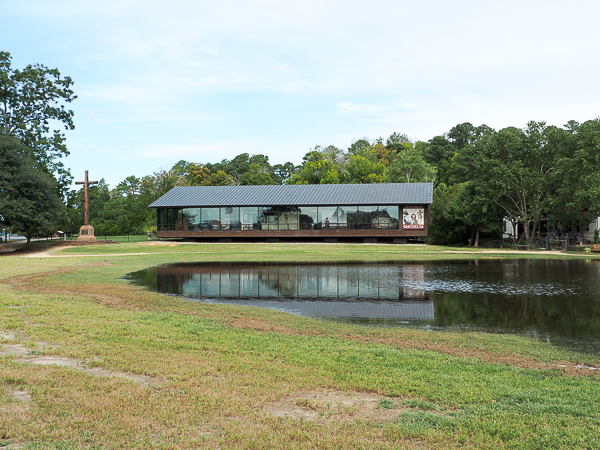
Archeological artifacts are displayed at the Archaearium along with their interpretation. The building is constructed over the site of the colonial statehouse built in 1665. The foundations can be seen underneath and between the modern building and the river.
High tides and the nor'easter affecting the eastern seaboard at the time of our visit has caused the "lake" in the field. The water was percolating up from underneath. This area is a priority for excavation because it will be lost to rising sea levels, but the remains found there are much deteriorated by the high water table.
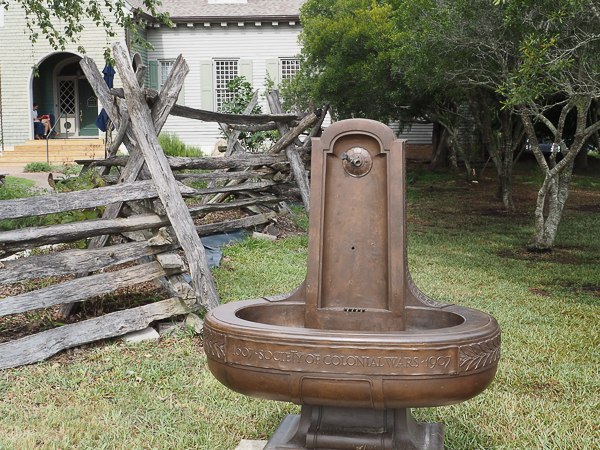
Another relic of the 1907 celebration. Most visitors to Jamestown in that day came either on horseback or via horse-drawn conveyances. This elaborate horse trough dates from that time.
There was also a human-sized drinking fountain.
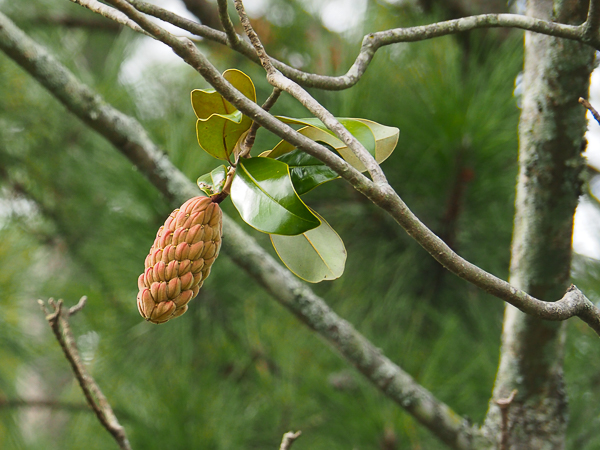
There is so much more to see and learn at Jamestown, but we had run out of time (and energy). I captured this Magnolia cone on the way out. It has been many years since I've seen one.
The cones open to show bright red seeds.
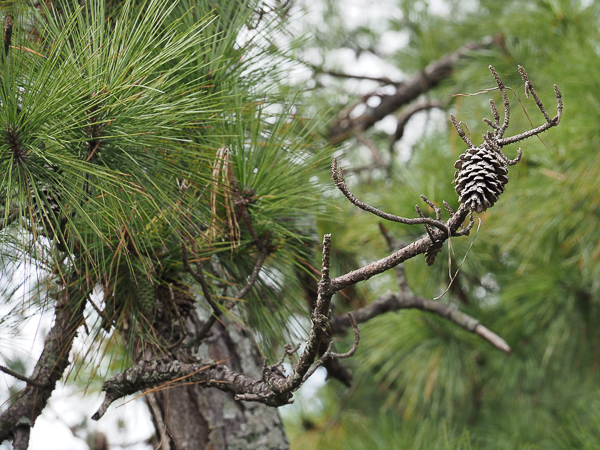
Another botanical specimen. Longleaf pines are threatened with only about 6% of the forest remaining. Virginia is the extreme northern end of their range. There are organizations dedicated to restoring them and they are increasing their range.
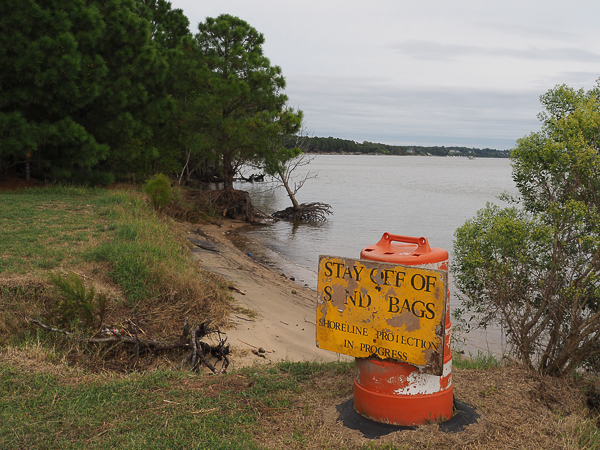
As we returned to Williamsburg for the evening, we took the Colonial Parkway along the James River. High water had flooded this "beach" along the river -- including the sandbags used to protect the shoreline.
The first French troops landed near this location to aide the revolutionary cause. They were led by the Major General Claude-Anne de Rouvroy, Marquis Saint-Simon. The Marquis de Lafayette took command of them to pin down Cornwallis and his force in Yorktown until French and American forces could reinforce them.
The two generals not only survived the American Revolution, but also the French Revolution. Rouvroy fled to Spain, Lafayette to Austria, where he was imprisoned for several years before being released at the intervention of Napoleon.
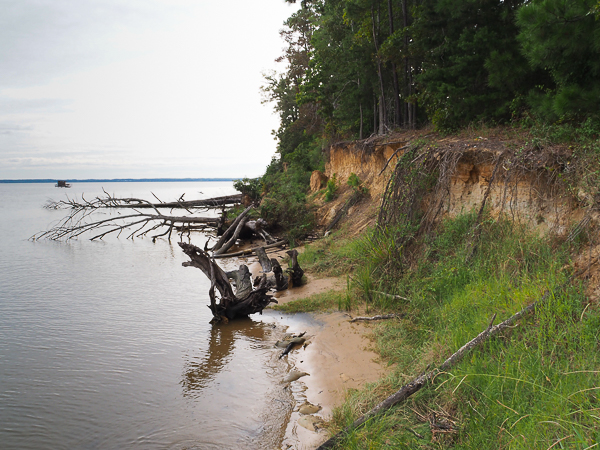
Nearby, river erosion was evident.
At Jamestown proper, a seawall built in the early 20th century prevented further erosion of the historic site.
Also near this spot is a dairy that is the last remaining part of the dream of Solomon Michaux for a National Memorial to the Progress of the Colored Race in America. His vision was never fully realized, but he did found a church and a dairy.
We passed the dairy, which looked prosperous, but is embroiled in legal controversy between the church, which owns the property, and the family that has managed the operation since the 1940s. I haven't been able to verify its current status.
Click your "back" button to return to the previous page or click for our picture album.