King James I chartered the Virginia Company, a private English enterprise, to establish a presence on the eastern seaboard of the American continent. The result was Jamestown, the earliest (1607) surviving English settlement on the North American mainland. The first years were rocky, to say the least, and at one time the colonists abandoned the attempt only to be turned back by a timely relief mission. St. Augustine (Spanish - 1565) claims to be the oldest European settlement. The French (Quebec) and Dutch (New Amsterdam) also founded early settlements that prospered. There were many more that did not and were abandoned. Although the Norse left the earliest traces (11th century), they were transient.
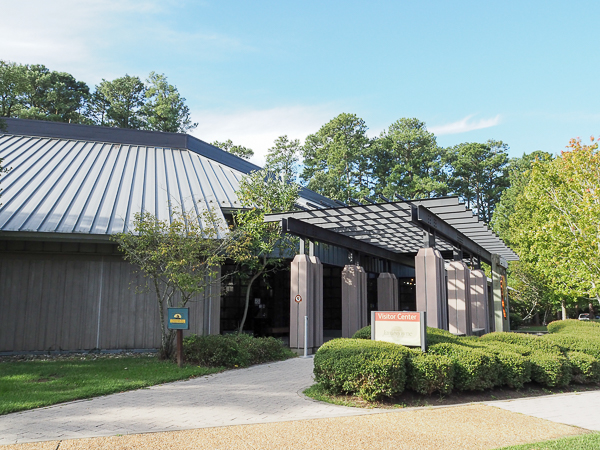
There are multiple tourist sites associated with Jamestown. Jamestown Settlement, managed by the state of Virginia, is a recreated "living history" experience that is not at the actual Jamestown location. I have visited it in the past and it has a lot to offer, but that wasn't our destination this time.
We wanted to see the real deal and chose the Historic Jamestowne site managed by the U.S. Park Service in cooperation with Jamestown Rediscovery, a private non-profit.
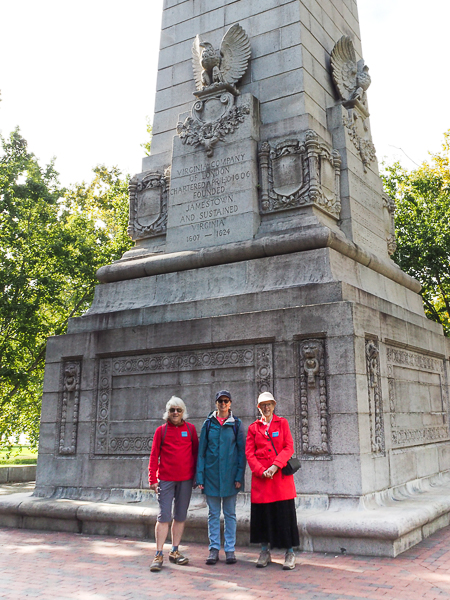
A friendly fellow-tourist took our picture at the Tercentennial Monument at the entrance to Jamestown Island. L-R are Marybeth, Barbara, and myself. As the name implies, it was constructed for the settlement's 300th anniversary in 1907.
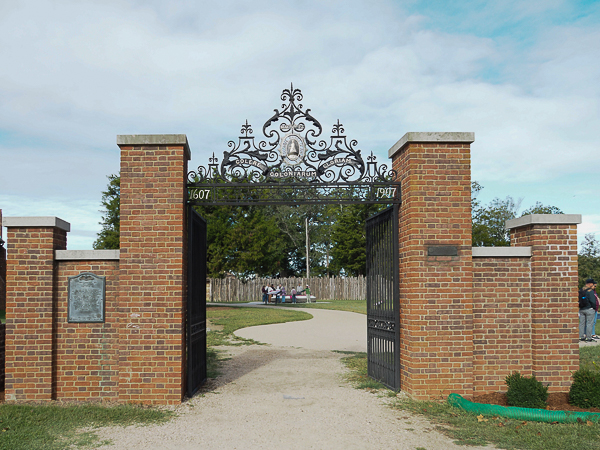
The Association for the Preservation of Virginia Antiquities organization purchased the land containing the original settlement site in 1893 and constructed this ornate gate for the 1907 tercentinnial. Although the organization's original founders may have emphasized the white-washed antebellum narrative, its successor, Preservation Virginia, seeks to transmit a more complex history.
This gate marks the transition from the National Park to the privately owned portion of the site.
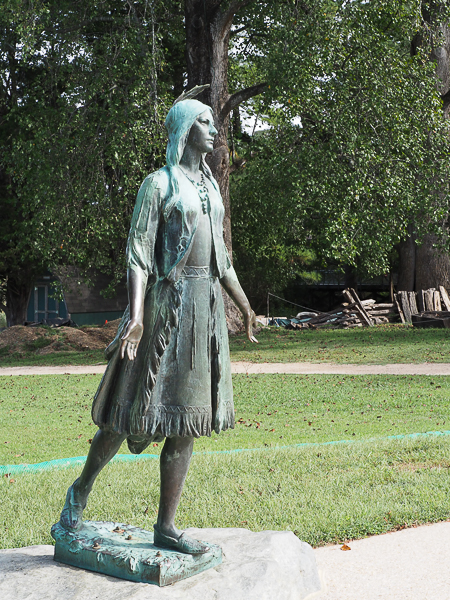
Just inside the gate is this statue of Pocahontas. Sculptor William Ordway Partridge inaccurately portrayed her in dress associated with Plains Indians. At the time of the statue's creation in the early 20th century, most Americans thought all Native Americans were alike and were only familiar with the plains tribes. Click for the best description I found of Powhatan clothing.
John Smith and others embroidered Pocahontas' story over the years, but she was a real person and really did serve as a diplomatic link between her father, chief of the Powhatan confederation, and the English settlers.
Today there are eight remaining tribes in Virginia, including the Monacan found in the Rockbridge County area. Trade networks existed among these at the time the English occupied Jamestown.
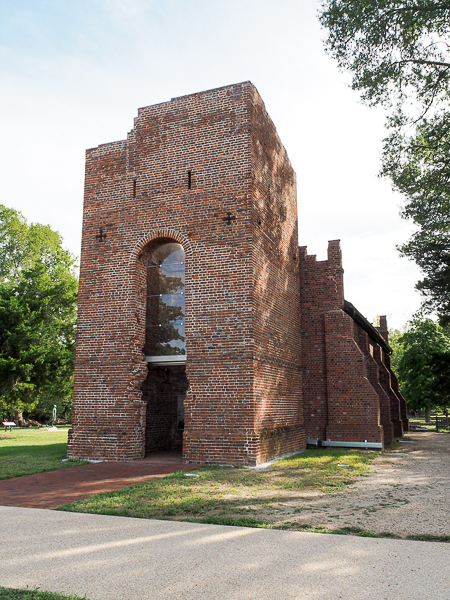
The only original structure standing at Jamestown by the end of the 19th century was this brick tower. It is the remaining portion of the fourth church on the island and archeologists believe it was built in the late 17th century as an addition to the brick church constructed 1639-1647. Archeological investigation in conjunction with the restoration found the preserved foundations of the 1639 church and part of the foundations of an earlier 1617 church, which can be seen under glass.
The 1617 church was the site of the first Virginia Assembly.
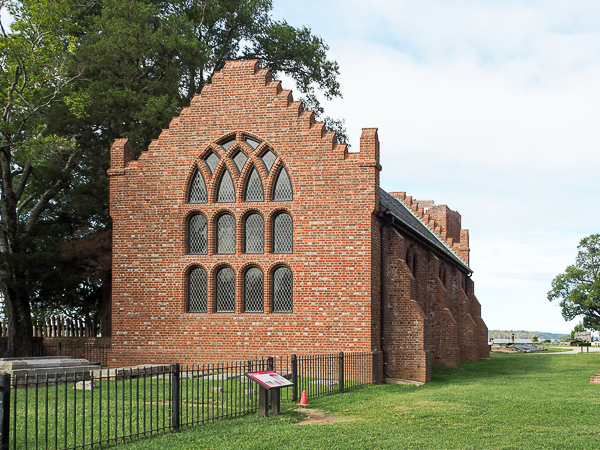
The Association for the Preservation of Virginia Antiquities and the National Society of the Colonial Dames of America funded the current memorial church completed for the tercentenary. It stands over and protects the foundations of the 1639 church. It was itself restored as part of the 400th celebration of Jamestown's founding.
There are several "Colonial Dames" societies and my mother was a member of one of them. Can't remember which.
2019 archeological research found older foundations and additional graves within the chancel as well as in the cemetery enclosed by the metal fence.
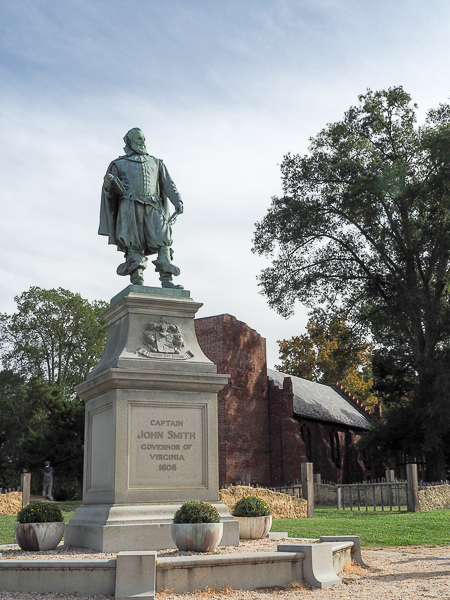
The statue of John Smith was installed as part of the tercentennial celebration.
His tenure at Jamestown was only one short incident in a tumultuous life that included times as 1) a mercenary in France and Hungary, where he was knighted for bravery, 2) piracy, 3) imprisonment as an Ottoman slave, all prior to Jamestown, and 4) exploration of New England afterwards.
Smith is credited with keeping the colony alive by his dictum: "he that will not work shall not eat." The colonists were, for the most part, gentlemen and their servants -- unused to manual labor, especially farming. Add this to the unfamiliar and inhospitable climate as well as restive natives.
Jamestown island itself was not suitable for long-term habitation, which is why the natives only visited it for hunting. It was (and is) swampy and mosquito-infested with no source of potable water.
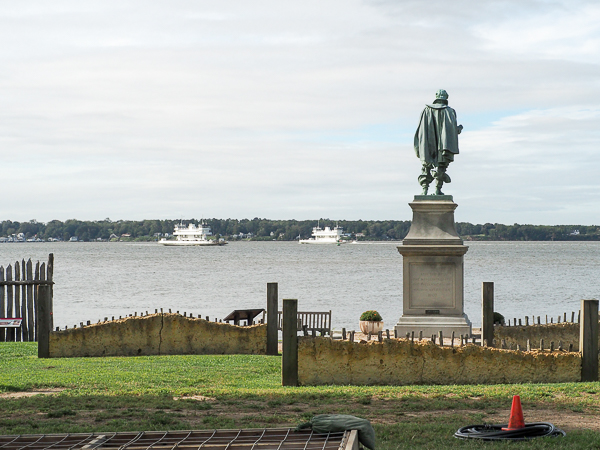
John Smith's statue overlooks the James River. One of the criteria specified for colony site selection was deep water and the James is navigable here.
The two boats are free ferries that carry vehicles between Jamestown and the opposite side of the James. When Jim and I visited in 1996, we took the ferry across. We never miss a chance to ride on a FF (free ferry) or TF (toll ferry) and have crossed rivers nationwide from New Jersey to Louisiana to Oregon.
This is the only river crossing for about 60 miles.
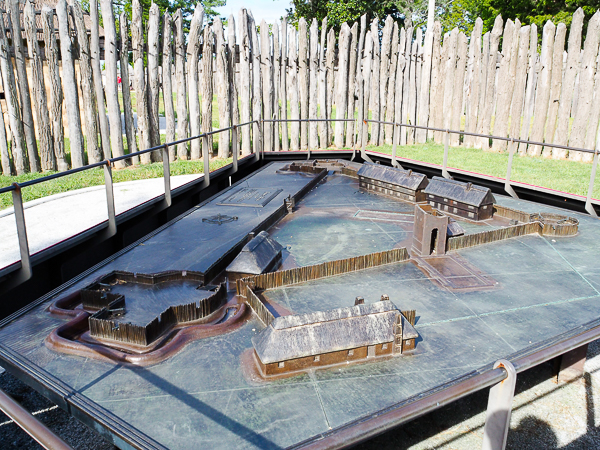
I neglected tp record who created this relief map or when, but it was probably for the 2007 400-year celebration. It shows the complete fortification and some of the buildings. The 1639 church footprint is indicated next to the remaining church tower. The two left-most bastions have been claimed by the river, but the rest remains and is still being excavated.
Click your "back" button to return to the previous page or click for our picture album.